

Choosing a Travel Scooter
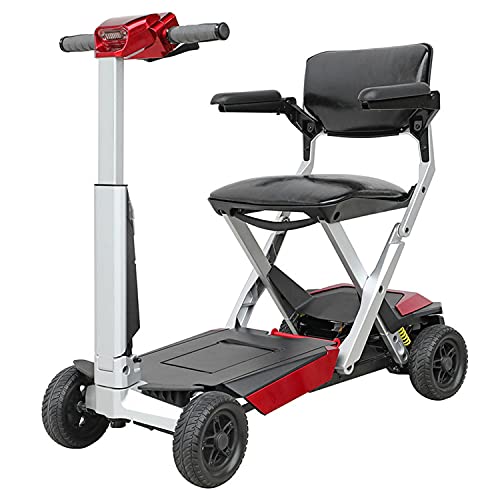
When choosing a scooter for travel it is essential to think about costs and the ease of use. A good choice is the GLION SNAPnGO that has a simple bones frame that allows it to fold quickly and easily, while being extremely durable.
This mobility scooter that folds light is FAA certified and can be disassembled in pieces that can be tucked away into the overhead compartment of an airplane. It also comes with a comfortable seat with armrests.
Folding or disassembling
It is much easier to transport a mobility scooter when it is foldable or disassembled. This will make the process easier when your loved one is likely to be taking their scooter in and out of the car frequently. light weight travel scooters 's also a fantastic feature for those who plan to use their scooter while traveling, such as during vacation or work.
When you shop, first take into consideration the weight of the scooter. The heavier the scooter is the more difficult it is to lift into and out of the trunk. While the majority of travel scooters are fairly light, you should always check the weight of the most heavy part to ensure that your loved one will be able to handle it.
The lightest mobility scooters that are available are the TravelScoot Cruiser and Escape. These models weigh only 23 or 30 lbs completely assembled and can be folded down by the lever clamp that is released on the seat assembly. The entire process can be completed from start to end in less than 60 second!
Adjusting the tiller is a different method to make your scooter portable. These are the controls for steering, and include a lever to adjust the forward and reverse directions as well as speed control settings. A lot of scooters also include an LED headlight, turn signal, and battery usage indicator built into the tiller. You can make your scooter more compact by getting rid of the front basket. Simply unclip it from the tiller and put it away.
The majority of travel scooters are disassembled or fold down, so it's crucial to know where these components are located prior to purchasing. Go through the manual of the manufacturer for specifics, but most disassembly involves removing the seat from its post, removing the basket (if it has one) and removing the battery pack. Some scooters also have a lever at the base that can be used to fold down the tiller and secure it.
If you're looking for a travel scooter that has more comfort features than folding mobility scooters, consider the Golden Buzzaround Carry-On. The model folds into a slim, compact package that fits into tight spaces like a closet or beneath your bed. This model is also suitable for transportation in planes or automobiles.
Width
When choosing a mobility scooter, it is important to think about the maximum width. The width of the mobility scooter needs to be as wide as it is to allow a person to sit comfortably on the backrest while driving it. It should also be wide enough to allow the scooter to pass through doorways and corridors with a minimum of six inches either side.
Many models can be folded down to a size similar to a suitcase. Some, such as the FreeRider Luggie Super, are exceptionally small, and can be easily carried in a trunk of a car, or any other vehicle. They have the lowest turning radius and fastest speed, making them ideal for indoor use.
If you are planning to use your mobility scooter on public transportation, check the maximum width limits of the coach or bus. These can be different from the minimum width for a standard mobility wheelchair, making it difficult for some users to use their scooter.
Another factor to consider when selecting a mobility scooter is its turning radius and ground clearance. While some people do not mind travelling over rough terrain, others may prefer an option with a smaller turning radius that allows them to maneuver in busy urban areas with narrow streets and tight corners.
A lot of scooters feature a tiller at the front of the steering wheel with controls for speed and directions for forward and reverse located on the tiller. The controls are typically operated using thumb paddles or finger controls that can be adjusted to suit the user's preference. Some scooters also have additional controls for lighting indicators, battery status and lights however these are not mandatory features.
When using a mobility device for indoor use, it is recommended to get assistance in positioning the scooter so that it is able to pass through narrow corridors and doors. This person can then be able to walk alongside the scooter while it is pulled through the doorway, making sure that it is clear of space before taking any sharp turns.
Wheels
The wheels on a travel scooter play a major role in how smooth and comfortable the ride will be. The tyres may be solid, foam filled or pneumatic. Pneumatic (air-filled tyres) offer the smoothest ride, but they must be maintained at the correct pressure to avoid punctures. Solid tyres do not puncture but they aren't able to absorb the same amount of bumps. The majority of full-sized scooters have pneumatic tyres. However, some travel/portable models might have solid or foam filled wheels as standard or as an option to add.
Three-wheel mobility scooters are easier to maneuver and have a more precise turning radius than four-wheel scooters but they're less stable and can be prone to tip over on uneven surfaces, such as sidewalks. They come with a safety function called an Anti-Tip System which reduces the risk of this by shifting the weight distribution to the rear wheels.
Four-wheel scooters are more stable than three-wheelers and can be used on any surface, including bumps, such as ramps or hills. They can be equipped with suspension systems to make them more comfortable on these kinds of surfaces.
The majority of travel scooters have swinging chairs that make it easier for users to get in and out. They also have adjustable seat heights so that the operator can choose a seat that is suitable for their needs. Some come with headrests and armrests for added comfort.
Some models have a basket that can be attached to the front of the scooter, so it can carry bags or shopping. It's much easier to transport your groceries to the supermarket or transport your children to school. You can also use it to carry things around such as laptops, cleaning supplies or other items.
Many scooters are equipped with a range of accessories, such as mirrors and lights. Some even come with a charging port on the tiller. This is useful for those who want to customize their vehicles to suit their requirements. Certain brands also have a selection of interchangeable colour panels to choose from to change the look of your scooter at any time you like.
Storage
There are a variety of options for storage on the travel scoot. The most popular is an open front basket that is attached to the tiller. It is usually small and has enough space to store personal items on short trips. You can increase the capacity of your scooter by adding a rear basket or saddlebags. You can also choose a mobility scooter that has under-seat space or purchase an storage box for your scooter.
Based on the amount of time you'll use your scooter outdoors, consider choosing the model with a longer battery life. You don't want to be running out of battery power mid-way through your trip. You could also invest in a rain cover for your mobility scooter. This will keep it dry and safe in the event of a sudden rainstorm.
Many people who use travel scooters are concerned that their mobility scooters will break or be stolen while traveling. This is a valid worry, since many mobility scooters aren't handled with care and could break when traveling on cars, buses, trains, or airplanes.
This is why it's crucial to purchase a mobility scooter that's built to last and secure. You should also invest in a quality lock to guard your scooter from theft. Another alternative is to store your mobility scooter in a secure garage or outdoor shed. This will keep it protected from the elements, but it is less efficient than storing your scooter in the portable shed.
Storage for mobility scooters must be considered during the design phase in order to avoid fire hazards and to support residents' right to a good quality of life that includes the use of a wheelchair scooter. The store should be located closest to the building's entry point without compromising the fire safety guidelines. It should also have well-lit pathways, compliant steps, and handrails in the event of shifts in level. Additionally the storage space should be situated at a distance from electrical wiring to reduce the risk of electrocution. The space must be regularly inspected and maintained to ensure it is safe and meets all health and safety standards.